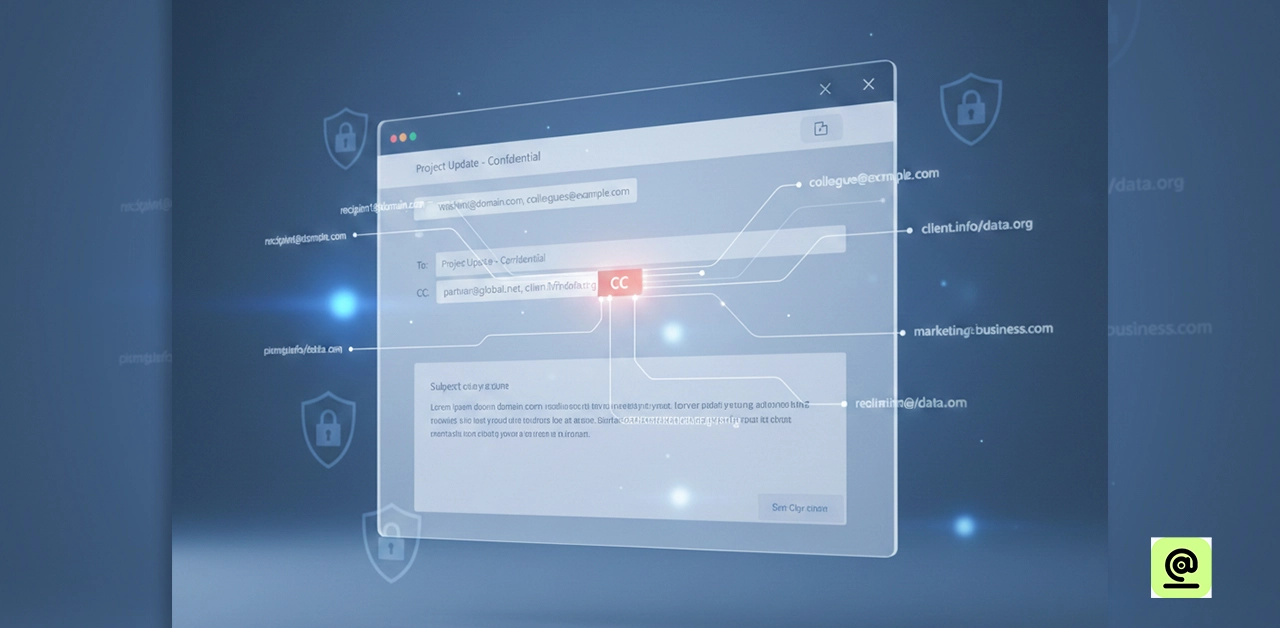
CC (Carbon Copy) is useful for sending emails to more than one person; it has some threats. Everyone who gets a CC email can see the email addresses of all the other CC recipients, which could incorrectly give away private information. If you don't use CC carefully, you could get spam or even lose trust in business or in personal communication. Knowing how to use CC correctly helps keep contacts secure and keep your inbox clean and organized.
Misusing Cc Can Expose Private Email Addresses
- Everyone who gets the email can see the email addresses of all the recipients.
- Sharing work or sensitive emails with a lot of individuals can let private contacts slip out.
- Forwarding a CC thread can send addresses to other people without their permission.
- People might accidentally hit "reply all," which would send personal information to a lot of people.
- If client emails are available to the public, businesses could violate privacy laws.
Pro tips: Misusing CC can harm trust and invite spam. In 2026, using BCC instead of CC keeps email secure and protects against accidental exposure. Always double-check recipients before hitting send. Check the difference between cc and bcc.
Can Other People See Who Is Cc'd?
Yes, everyone who gets an email can see who has been CC'd. When you CC someone, their address is clearly next to the main recipient. This helps keep things open when you're talking to clients or getting updates from the office. But it also takes away privacy. It would be unsettling to share weekend plans with strangers and then find out they read them too. CC is better for working together than for sending private messages.
BCC feels safer sharing private information. In reality, a lot of businesses in the US use BCC to send out mass emails and newsletters. CC is good for meetings or family planning, where everyone can see what's going on. Before you push submit, always take a second. A modest option may keep your inbox calm and keep things from getting mixed up.
What Are the Risks of Using CC in 2026?
- CC'd email addresses are visible to everyone, which could undermine privacy and trust.
- A single wrong click can show client information or confidential conversations.
- Seeing strangers in the same thread could make some people feel uneasy.
- It's easy to miss critical replies when your inbox is full.
- Businesses that utilize CC carelessly are at risk because of GDPR restrictions.
- Spam replies frequently get worse when a lot of individuals are copied.
- Once shared freely, sensitive updates lose control.
Can Someone Share My Email Address Without My Permission?
Yes, someone can give up your email address without asking. But it isn't necessarily right or lawful. A lot of privacy rules say that you need to give permission before your personal information can be shared. Imagine giving your email to a store and then getting random deals. It feels like an invasion of privacy.
Friends could send your address around without thinking, and some firms utilize mailing lists in the wrong way. This typically results in spam or calls you don't want. Don't put your email address on public websites. Use a different inbox for sign-ups to keep yourself safe.
Frequently Asked Questions
Are Email Addresses Considered Pii (Personally Identifiable Information) In The US?
In the US, email addresses are considered PII if they belong to a genuine person. For instance, emails with names in them feel just as personal as a house address. CCPA and other laws also see them as protected data. That implies companies need to be careful with email addresses. People want privacy, especially when data leaks are becoming more regular.
Are Email Addresses Personal Data?
Yes, many privacy laws around the world say that email addresses are personal data. They are intimately linked to someone's identity or online existence. Also, platforms use email for purchases and alerts. When you get birthday notes or job updates in your email, it feels like someone is talking to you. Because of this, GDPR and other rules say that businesses must protect email data.
How To Stop Receiving Junk Mail 2026?
To get rid of unsolicited emails, click the link at the bottom. Then highlight spam so that your filters can learn faster. Also, don't put your email address on public websites. Make a separate inbox for sign-ups. In 2026, better filters will help, but your behaviors will still matter. Know more about “how to stop receiving junk mail.”
How To Test An Email Address Without Sending?
You can use online verification tools to validate an email address. These check the format, domain, and mailbox status without sending a message. Also, this lowers the number of bounced emails and protects your reputation as a sender. Before campaigns, a lot of businesses do this. It's like looking over invites before sending them out.
Can You Reply When Bcc?
Yes, but just to the person who sent it. BCC hides other people who get the email, so you won't see them. Your reply won't go to hidden addresses either, even if you choose "reply all." Imagine talking softly in a room full of people. BCC is good for newsletters and client emails because it keeps people's information private.
Final Verdict
A lot of individuals don't know how easy it is for CC recipients to see each other, which can lead to spam or even legal problems. Using BCC or checking recipients twice helps keep emails safe and confidential. Being careful with CC protects connections and keeps your reputation intact.