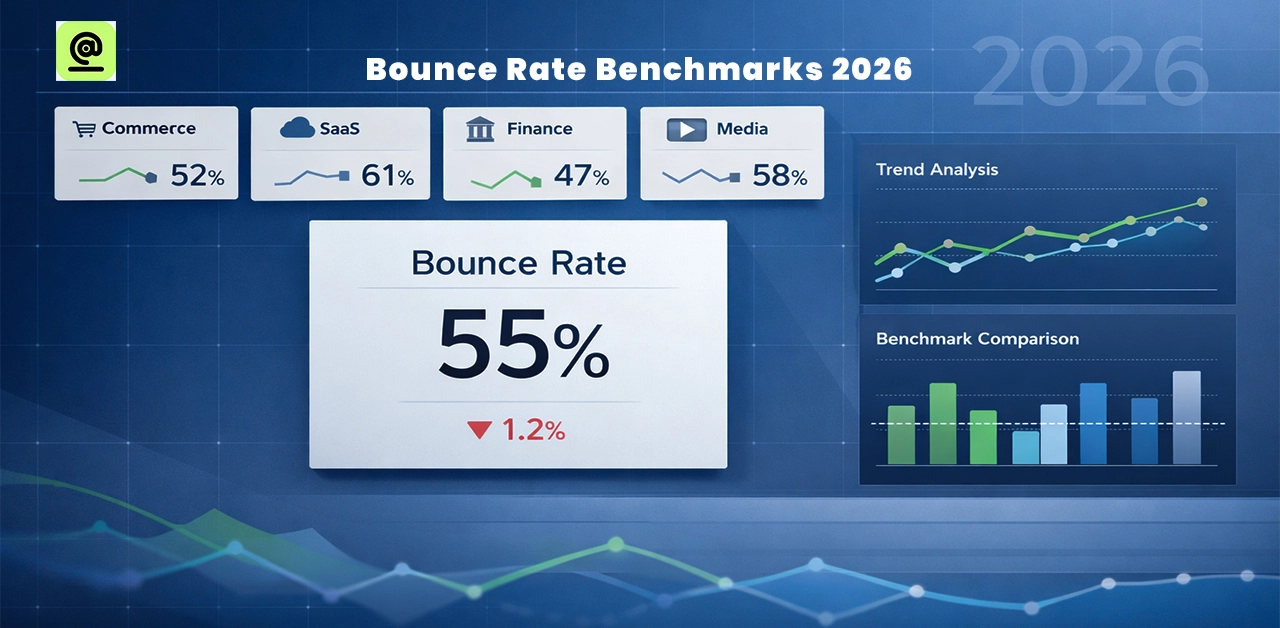
Email Marketing Bounce Rate Benchmarks 2026
In 2026, email marketing is still an important tool for US firms, but getting emails to people's inboxes is harder now. The bounce rate is an important number that tells you how many emails don't get delivered. High bounce rates might hurt your reputation as a sender and make your campaign less effective. Marketers may figure out what a good performance looks like and what they need to do to increase deliverability, engagement, and overall email marketing success by looking at industry benchmarks.
Email Bounce Rate Benchmarks In 2026 (USA)
Email bounce rate standards in the US in 2026 give marketers a clear picture of how good their list is and how well their emails are getting delivered. For email marketing to be healthy, the overall bounce rate should stay below 2%. That's the norm that most trustworthy email providers anticipate when you keep your list clean. If you see a number higher than that, it usually means you need to clear your database of old, invalid, or unverified contacts.
High-performing lists, especially for B2C campaigns and robust opt-in programs, usually have bounce rates of less than 1%. That level makes it very likely that your emails will get through, and it greatly minimizes the chance that email providers will filter or blocklist them. There may be some variances across various industries, but the essential guideline stays the same. Lower bounce rates help your sender reputation and make it more likely that your email will get in the inbox instead of being rejected.
What Is A Good Open Rate For Email Marketing?
In the United States, a respectable open rate in 2026 is normally between 20% and 30%. But the precise quantity relies a lot on your field and how good your audience is. Most ecommerce brands have open rates of 18% to 25%. Businesses that sell to other businesses (B2B) often reach 25% or more. If your campaigns routinely get 30% or more, you're doing very well.
That being said, stats alone don't tell the complete story. The privacy improvements for Apple Mail have made open tracking less accurate. Because of this, a lot of marketers now pay more attention to clicks and conversions than just openings.
Difference Between Open Rate And Click Rate
| Metric | Open rate | Click Rate |
|---|---|---|
| Shows | Initial interest | Real engagement |
| Influenced by | Subject line,sender name,send time | Email copy ,design,offer,CTA placement |
| Business impact | Build awarness | Drives conversations and revenue |
| What it measures | Subject line effectiveness | Call to action strength |
| Accuracy in 2026 | Less reliable due to privacy updates like Apple mail | More reliable performance indicator |
How To Calculate Open Rate And Click Rate?
It's easy to calculate out the open and click rates for emails. But a lot of beginners still get the formulas mixed up. Let's make it plain.
Open rate Formula
(Total Opens ÷ Total Delivered Emails) × 100
For instance, if you sent out 1,000 emails and 250 individuals opened them, the open rate would be 25% (250 ÷ 1000) × 100.
Click rate formula
(Total Clicks ÷ Total Delivered Emails) × 100
If 1,000 emails were sent and 80 people clicked on a link, the click rate would be 8% (80 ÷ 1000) x 100.
How To Improve Email Open Rates?
Make your subject lines stronger. Make them short, straightforward, and interesting. Make people feel something right away.
Send at the proper time. Try mornings and evenings. People in the US regularly check their emails early in the morning before work.
Make sure to clean your email list often. Delete contacts that are no longer active. A healthy list makes it easier for emails to get through and land in the inbox.
Make sure the sender's name is easy to remember. People read emails from brands they trust. Don't use generic addresses like "noreply."
Be careful when you make things urgent. When used honestly, words like "today" or "limited" get more attention.
Divide your audience into groups. Send only the people who need it the right information. Natural opens are based on relevance.
Don't use words that will make spam. Too many capital letters or symbols make you look less credible and less likely to be found.
Text in the preview is important. You should treat it like a second headline. It should clearly back up the subject line.
Also Know more about how to improve click rate
Frequently Asked Questions
Is It Better To Have Clicks Or Opens?
Opens are a sign of interest, but clicks are a sign of true intent. That's why clicks are more important when you're trying to grow. An open just means that someone saw your subject line in their inbox. But a click shows that they trusted you enough to go on. Brands in the US care more about getting people to buy than just seeing their ads. High open rates could make you feel good, but clicks are what really make money.
How To Calculate Open Rate And Click Rate?
To find your open rate, divide the total number of opens by the number of emails sent, and then multiply that amount by 100. The same formula works for the click rate. To get the percentage, divide the number of clicks by the number of emails sent and then multiply by 100.
Is a 70% Bounce Rate Good?
A bounce rate of 70% is quite bad for any marketing. A good bounce rate for email marketing is usually between 0.5% and 2%. If you go beyond 5%, it means there are major concerns with deliverability. If your email list has a 70% bounce rate, it's likely that it's old, bought, or full of bad addresses. Your domain could be rapidly blocked or flagged by internet service providers.
How to Stop Receiving Junk Mail 2026?
Unsubscribe from emails you don't read or need anymore to get started. Most US brands are required by law to have an unsubscribe link in every correspondence. In Gmail or Outlook, you should also label emails that seem suspicious as spam. Over time, this helps your email filter learn how to spot spam.
Final Verdict
A good email bounce rate in the US is less than 2% in 2026, and the best lists generally have bounce rates of less than 1%. Keeping a low bounce rate preserves your sender reputation, makes sure your messages get to real subscribers, and makes sure they get delivered. High bounce rates mean that your contacts are old or wrong, which might hurt engagement.
.webp)

