Real-Time Email Validation API: How It Works & Why Every Saas Needs It
In the digital world, first impressions are key. A streamlined signup procedure is the first step toward long-term success. Your platform can check every new member right away when they join your community if you employ a real-time email validation API. This proactive procedure keeps your database clear of mistakes, fraudulent entries, and dangerous bots that could hurt your progress. So, you create trust while keeping your channels of communication open and your sender reputation intact. By finding mistakes at the source, you make a smooth journey that invites real people into the story of your brand.
Why Every Saas Needs Real-Time Validation?
Real-time validation keeps bad data from getting into your database in the first place. To keep high deliverability and make sure that automated welcome emails go to where they need to go, any SaaS platform needs clean user data. So, checking addresses when people sign up stops mistakes or false entries from hurting your sender reputation with big providers.
This fast feedback lets users address issues right away, which makes the onboarding process lot smoother and more professional for everyone. Also, keeping bots away preserves your marketing budget and makes sure your sales force only works with actual people who are interested in your product.
How to Choose the Right API?
When choosing the right API, you need to find a good balance between how well it works technically and what your developing digital platform needs. First, you need to look at the documentation to make sure it is clear, well-organised, and simple for your engineers to use. Also, checking the service's uptime history and latency rates makes sure that it stays reliable for your users even when there is a lot of traffic.
Scalability is also important because when your audience grows in different worldwide markets, the tool needs to be able to handle more requests. Always search for strong security measures like OAuth or API keys to keep sensitive data safe from possible cyber assaults. A helpful community and an active development forum also give you a safety net when you run into problems with integration or bugs. Know more about how to integrate email verification APIs.
What Factors Affect Website Loading Speed?
Server response time is very important since a slow host makes your visitors wait for the first byte. Using contemporary formats helps your pages feel light and incredibly quick because big, unoptimized images can slow down the connection. Heavy JavaScript and big CSS files also make browsers work harder, which makes content take a lot longer to load. A messy database or too many active plugins might also slow things down by adding extra steps that don't need to be there. So, getting rid of these digital barriers will make sure that every user has a seamless and professional experience on your site.
How to Reduce Website Loading Speed?
Improving the performance of your website keeps users happy and helps your pages show up higher in search engine results.
- Optimize Images: Change big files to newer formats like AVIF or WebP to conserve space without losing quality.
- Enable Caching: Use caching on both the server and the client side so that those who come back don't have to download the same things twice.
- Use a CDN: A Content Delivery Network stores your site on servers all over the world and sends it from the server nearest to the user.
- Minify Code: Get rid of superfluous spaces and comments in your HTML, CSS, and JavaScript files to make them smaller.
- Choose Fast Hosting: For faster connections, switch to a host that supports contemporary protocols like HTTP/3.
- Limit Plugins: Check your site to see if there are any extra tools or scripts that you don't need that are making it take longer to load.
Which Are The Best Real-Time Email Validation APIs?
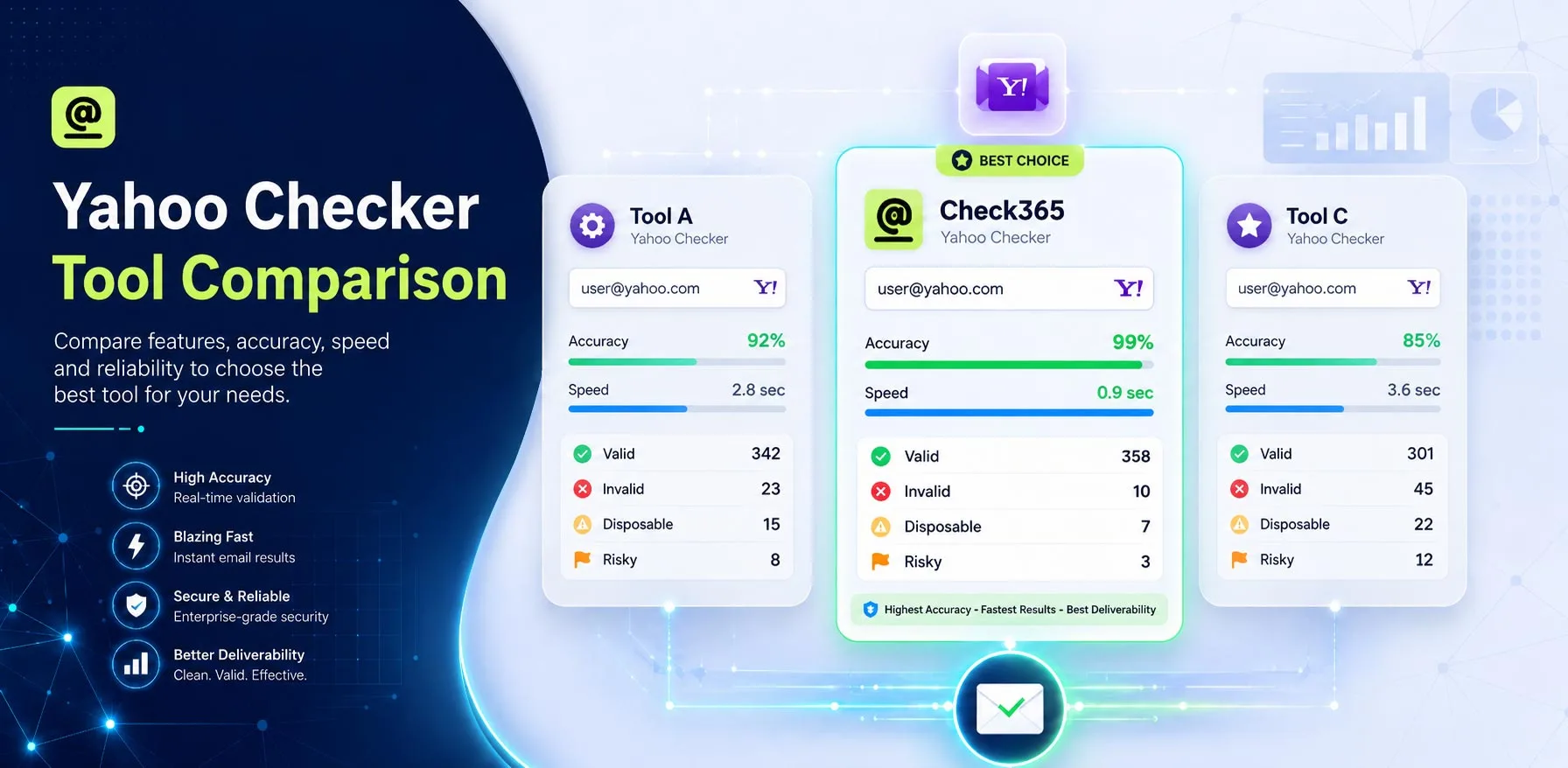
Check365 is a great choice for modern developers and marketing teams who need high-performance real-time email validation. This platform, which is situated in the United States, has a strong API that quickly filters out email addresses that are invalid, transitory, or hazardous during the sign-up process. So, your database stays clean, and your sender reputation is safe from high bounce rates and the possibility of being blacklisted. Check365 uses extensive syntax checks and SMTP handshakes to make sure that every mailbox really exists without ever delivering a message.
Frequently Asked Questions
What Is the Difference Between Bulk Email Verification and Real-Time Email Verification?
Bulk email verification cleans up lists all at once, while real-time checks check addresses as soon as users enter them into sign-up forms. So, this two-step method makes sure that your database is up to date and your sender reputation stays solid for future campaigns. Real-time tools remove bogus data right away, but bulk cleaning fixes lists that have been around for a while and are getting worse over time.
How to Validate Bulk Emails?
To check bulk emails, you send your whole list to a special cleaning service that looks for mistakes in each item. The system sends pings to mail servers to check that accounts are real without actually sending any irritating or intrusive messages to the people who own them. These technologies also find old domains and syntax errors that can lead to high bounce rates and harm your marketing.
Can NLP Be Used to Detect Spam Emails?
Natural Language Processing helps filters figure out what the words in a suspicious communication really imply and what the sender really wants. The machine finds misleading language that regular keyword filters can miss or overlook by looking at patterns and emotional triggers.
How to Find Spam Trap Emails?
To identify spam traps, monitor your delivery reports for addresses that consistently cause your emails to bounce without ever responding. These "honeypots" are only there to capture careless senders, hence they are mainly found in older lists or lists bought from other people. So, to prevent these hidden traps, you need to get rid of any contacts who haven't opened an email in months.
What are the most common types of spam messages received in email?
Fake lottery winnings, urgent bank alerts, and unsolicited offers for inexpensive drugs and luxury products are the most typical types of spam mail. These emails often utilize wording that puts a lot of pressure on you to click on links that could be harmful or share your private, sensitive information. You might also encounter "phishing" attempts that look like real brands and try to steal your passwords or hard-earned money very quickly.
Final Verdict: the Foundation of Clean Saas Growth
As you grow, these minor but important changes will protect your marketing budget and help you build a more sustainable future. In the end, picking the proper tools today lets you focus on what really matters: making great products for your users.