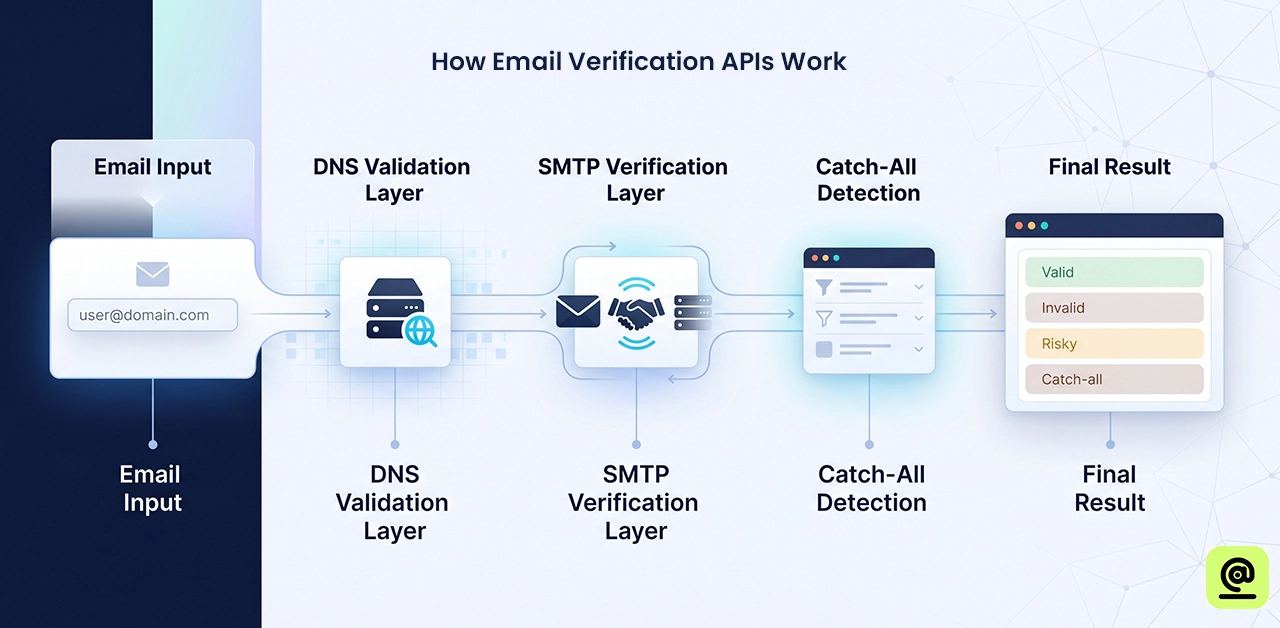
How Email Verification APIs Work (DNS, SMTP, Catch-All Detection)
An email verification API is the first thing you should use to make sure that every address you collect is real and can be reached. These technologies use real-time technological checks to filter out rubbish before it harms your business, so you don't have to guess if your communications will go through. You may stop wasting time and money on "ghost" accounts and start making real connections with people by employing this technology.
Why Is Email Verification Important?
Checking your email list is like making sure that your message can go to a real person. Internet service providers will designate you as a "spammer" if you send mail to bogus or defunct addresses. This hurts your reputation. This automated bouncer stops bounces before they happen, which keeps your sender score high and your costs cheap. It keeps your hard work from ending up in the "Junk" folder, where no one checks. By getting rid of bots and typos, you make sure that every dollar you spend on marketing reaches a genuine person. This makes your business look professional and trustworthy in a congested inbox.
Step-by-Step: How Email Verification APIs Work
An email verification API works like a quiet detective to keep your mailing list healthy. Before you hit "send," it runs through a number of checks to make sure the message won't bounce back.
Syntax Validation (First Filter)
The API is like a grammar coach for your data at first. It checks the email to make sure it matches the standards, including having a "@" sign and a valid extension like ".com." It quickly finds basic mistakes like "john@gnail" or unnecessary spaces, which stops obvious mistakes from happening.
Domain Verification Using DNS Lookup
Next, the program checks to see if the domain name is really out there on the open web. The API checks to see if the website is live by doing a DNS query and looking for MX records. These records are like digital signs that tell the internet which server is in charge of handling all of the incoming mail for that domain.
SMTP Verification (Mailbox-Level Check)
This is the most important phase, when the API and the recipient's server "shake hands." It transmits a small signal to see if a certain user, say "sarah@example.com," is real. The server answers with "yes" or "no," which lets the API check the mailbox without sending a real email that might disturb the user.
Catch-All Detection Explained
Finally, the API finds "catch-all" domains, which are servers that are set up to accept all emails sent to them. This seems fantastic, but that implies the server won't tell you if a certain person really works there. The API marks them so you can evaluate if the chance of a future bounce is worth sending.
How to Choose the Right Email Verification API Tool?
- Accuracy: Choose APIs with success rates of 98% or higher and excellent catch-all resolution.
- Speed: Make sure that real-time verification for signup forms takes less than 200ms.
- Security: Make sure that your data protection policies follow SOC2, GDPR, and CCPA.
- Scalability: Look for high "per-minute" restrictions so you can manage big lists.
- Integration: Look for plugins that work with WordPress and Zapier and clear API documentation.
- Price: Compare the cost per credit and look for "credits that never expire."
- Support: Pick a supplier that offers live chat 24/7 for help with technical problems.
- Risk Scoring: Choose technologies that mark spam traps, poisonous domains, and bot emails.
Frequently asked questions
What Does An Email Verification Tool Do?
This tool works like a digital gatekeeper for your email list. It checks right away to see if addresses are authentic, active, and safe to message. This eliminates bounces and keeps your sender reputation safe.
How Does Smtp Authentication Work?
Your server uses certain credentials to show that it is who it says it is to a receiving server. This "handshake" proves that you are a real sender, therefore your emails will get to the inbox instead of the spam folder.
What Is A Catch-All Email Domain?
No matter what the prefix is, a catch-all domain is set up to accept all messages submitted to it. It puts all of the "info," "sales," or even misspelled names messages into one folder.
What Does It Mean If An Email Is Catch-All?
It means that the server is a "yes-man" and will take any mail. also stops communications from getting lost, but also makes it hard to verify because the server won't say if a certain user exists.
Final verdict
Through Check 365, you can easily integrate the email verification api. Businesses that care about their online presence can't afford to use APIs anymore. You can preserve your sender reputation and ensure your marketing budget truly works by automating DNS, SMTP, and catch-all checks. "Catch-all" addresses are still a problem, but the appropriate technology gives you the information you need to make sensible, risk-based choices.
.webp)

